
 Because Nice Matters
Barbara Gaines, President

Sense of Etiquette
So you want to start your own business? You are a wiz. You are talented. You multitask like a champion. You are sure you will outpace the competition. You are a minority (person of color, a woman, gay, etc.), but do I want to do business with you?
Nice matters.
I will pay more for products and services because nice matters. I pay more because I am confident that I will receive quality products and excellent service. That assurance is worth the extra money. I want to do business with people I like and who are courteous, respectful and trustworthy.
 Are you that person? Does your verbal and nonverbal expression (essentially your attitude) make me want to do business with you? Are you standing in your own way? When starting a business, it more than just the startup flurry and an effective business plan. It is knowing what to do, when to do it, but more importantly how to do it.
ImagenWill your company have the right balance of technical expertise and professionalism? Are you smart? Are you savvy? Do you have professional polish and panache? Are you nice? When buyers shop, all of this counts because nice matters.
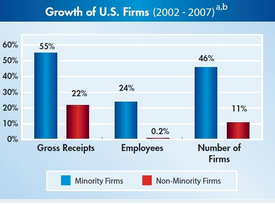
Whether your company is local, national or international, understanding business etiquette is critical. The growth of new minority‐owned businesses is on the rise. These businesses generated just over 10% of the gross national receipts, totalling more than $10 Trillion. To continue to increase its share of the American pie, minority businesses must be passionate. Minority businesses must stand out. Minority businesses must be nice because nice matters.
There is a connection between business etiquette and the profit margin, because nice matters. Here are the top three business etiquette principles:
1. Your #1 priority is your customer.
2. Your product or service must have the WOW factor.
3. Your customer must always feel like they won.
To learn more about business etiquette and how to stand out from your competition, please visit www.senseofetiquette.com
Reference for Growth of U.S. Firms (2002‐2007) ‐ http://www.mbda.gov/sites/default/files/FactSheet‐Minority‐OwnedFirms.pdf
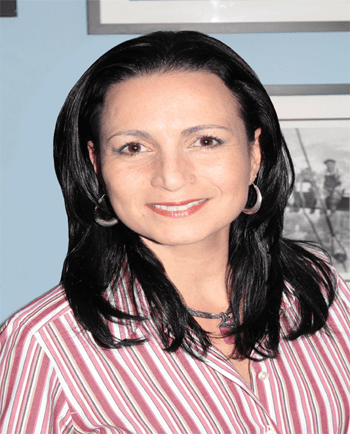 I’m Latina. Latina, I am. Soy Latina. It’s been a journey of two decades that brought me to proudly and steadfastly claim my identity here in the U.S., slowly transitioning from “I’m Puerto Rican” to the more inclusive “I’m Latina”. Let me explain…
Just as many million other immigrants in this country, I arrived to the U.S. a little over 20 years ago longing for big opportunities, new adventures, and in hot pursuit of a promising future. With a Masters Degree in hand, and full command of the English language I was ready to conquer the Big Apple. But I didn’t, and it’s OK. Many don’t and I’m in very good company.
Looking back, I’ve come to realize that being from Puerto Rico and a woman immediately classified me within the segment of the working-class called Hispanic female. I quickly learned to survive by building meaningful relationships with fellow colleagues who also had roots in Latin America. They too faced the same challenges as me, and were all setting our eyes on the same goals, among them reaching that six-figure salary. Sandra from Perú, Marcia from Ecuador, David from Puerto Rico, Francisco from Dominican Republic, Roxana from Argentina, and countless others, became familia, and I became Latina in their midst.
Ah! I was so naïve! So trusting! So innocent! Overworked and underpaid was my work status during my eleven-year tenure in Corporate America when compared to my White male counterparts. And nothing much has changed since. According to a 2012 study conducted by the American Association of University Women (AAUW), Hispanic women earn on average 53 cents for each dollar earned by a White male to perform the same work (White females make an average of 78 cents for each White male dollar earned).
Then, in 2008 I lost my job. Yeah, the notorious Recession. I was at a crossroads. I was almost 40, Masters Degree still in hand, fully bilingual and now with over a decade of solid work experience. I had to be real and ask myself: “What are my options as a Latina? Do I stand in line with another 500 people to fight for that one available job that will pay a fraction of what I am used to earning?” At this point, I was completely aware that I was making way less than my White male counterparts, who by the way, were also standing in that line.
Without hesitation I decided to join the ranks of hundreds of thousands Latino business owners who fuel this country’s economy. I participated in events held by various chambers of commerce; Hispanic, Puerto Rican, Brazilian, Moroccan. I found my voice, once stifled by a system that wanted to define me. I learned to articulate my role in my very competitive industry and in my community. I was able to explore wonderful collaborations and friendships with people of all professional and ethnic backgrounds on my terms, as a businesswoman. And in that process of professional enrichment and growth I’ve discovered that during the last few years I’ve been proudly and steadfastly claiming a new identity here in the U.S., slowly transitioning from “I’m Latina” to the more inclusive “I’m Brown”. Brown, I am. Soy Brown. No need to explain…
Sami Haiman-Marrero
President/CEO
![4FB22805-2FA9-40EA-BD9D-AC84242DDD68[3]](http://naof.us/wp-content/uploads/2015/04/4FB22805-2FA9-40EA-BD9D-AC84242DDD683.png)
